Committed to reducing carbon emissions from the transportation of our goods.
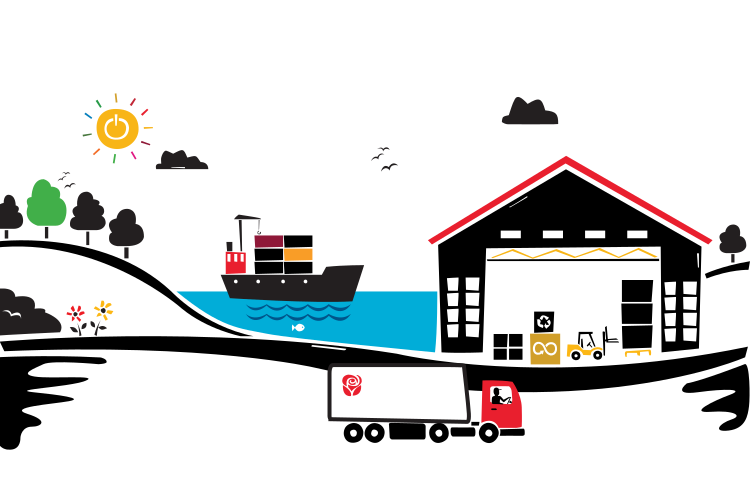
The global transport system is estimated to account for 14% of the world’s greenhouse gas emissions. To help prevent climate change and reduce our carbon footprint, we are innovating to promote lower carbon transport and distribution throughout the journey of our products.
Picking
It all starts when we pick products for customers. Our distribution centre has a 6 Star, Green Star Rating, meeting Australian standards for energy efficiency. RF scanning capability runs across the entire distribution centre enabling an efficient warehouse and providing the necessary technology to run an accurate and organized order picking operation with significantly reduced paper usage as Order Pickers are not wasting time handling different paperwork for each item/order
Packing
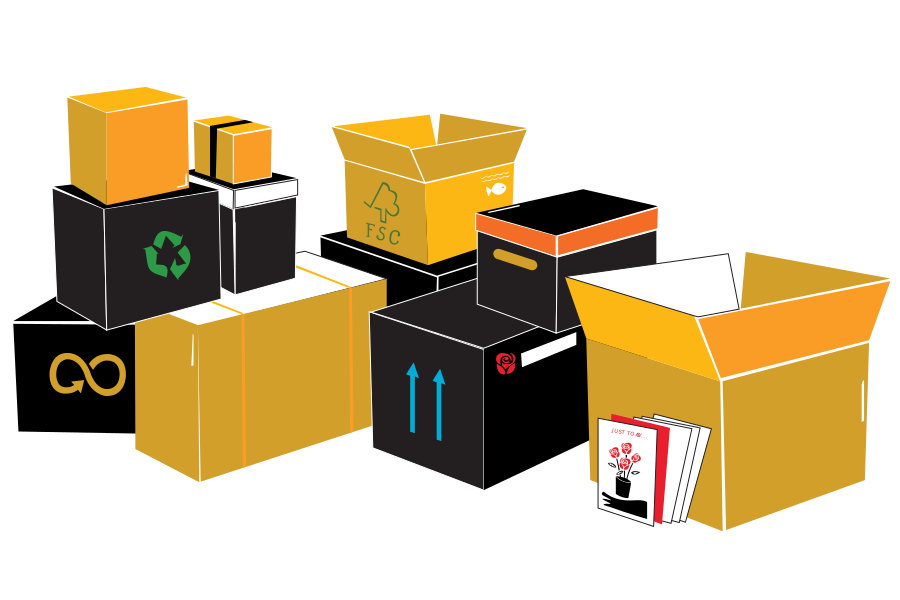
Reusing or recycling saves carbon emissions by preventing the need for more new packaging to be made. When filling customer orders, we first package their products using boxes that we reuse from our suppliers. If that’s not possible, we then look to using FSC-certified, recyclable shipping cartons.
We are continuously looking for ways to reduce the use of plastic associated with shipping product from our distribution centres. Carton strapping has been removed and initiatives to remove tape are under investigation.
Sharing the load
Our third-party logistics partners share the same commitment for taking responsibility for reducing emissions over time while maintaining our competitiveness and ability to deliver to customers’ expectations. We measure the carbon emissions generated across our global operations and together are working within the carbon net zero program to reduce carbon emissions by 50% by 2025.
Sustainable transport
As the majority of our products are made in China and the UK, we ensure when shipping, that containers are utilised efficiently, removing unnecessary weight and space and thereby, reduce the number of journeys and carbon emissions.
For domestic transport in Australia and New Zealand, our partners are working to reduce emissions with the following sustainability initiatives:
Further, we are seeking with our partners to create an agile supply chain with the use of a sophisticated technology platform that presents a single view of all the partners in our supply chain. This end-to-end visibility enables our 4PL to identify unused capacity in the system using insights to optimise carrier utilisation. The result is waste elimination which reduces cost, unlocks competitive advantage and reduces greenhouse gas emissions from fewer trucks on the road.